How to Rob a Bank… From the Inside

Banks are fantastic wealth-creation machines. Here’s how it works:

  • I create the Bank of Elaine with zero assets.
  • Foodstamp Fred shows up and asks for a $100 loan.
  • The bank creates an account for Fred with a $100 deposit. The bank now has $100 worth of assets in the form of a loan.
  • Banks have a 10% capital requirement for loans, so I sell some shares of the bank for $10.
  • Fred would like to withdraw his $100 deposit in small unmarked bills.
  • Bank of Elaine doesn’t have $100, so it borrows the money from another bank. Actually, ElaineBank borrows $300, using this $100 loan asset as collateral.

And that is how wealth is created.

See Also:
Basics of Banking: Loans Create a Lot More Than Deposits –CNBC

The Insurance Paradox

If my health insurance provider were a rational player, it would hire somebody to shoot me when I get injured, to avoid paying for my expensive trips to the hospital.

If my life insurance provider were a rational player, it would pay for me to receive the best health care possible, to make sure I live forever and maximize the premiums paid over my lifetime. If I don’t die, State Farm never has to pay out benefits.

Why isn’t my life insurance provider in charge of my health care? Why isn’t my health insurance provider the one paying benefits when I die?

Legally, neither provider is allowed to do that. From a capitalist perspective, insurance is a terrible industry. It takes cash out of circulation by receiving premiums, and saves the money in an illiquid vault for a rainy day. Unlike banks, insurance companies can’t even loan this cash hoard out to borrowers.
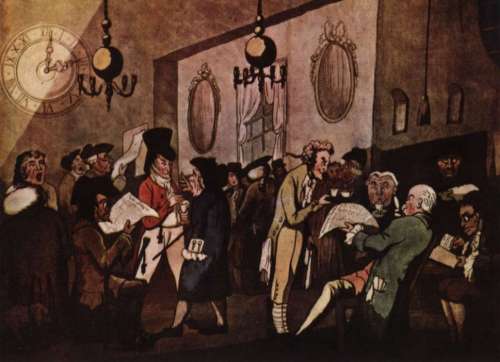
Lloyds of London

It used to be the other way around. Long before Obamacare and socialized insurance risk, wealthy individuals with real estate and property could independently sell insurance. They would meet at Lloyd’s Coffee House to sign the deals. Pay me £x per month, and if your ship sinks, I’ll give you my house. The trade of immovable assets for cash payments created a liquid marketplace, ensuring peace and prosperity for all.

At some point, the insurance underwriters got greedy and sold more insurance policies than they could afford to pay out. Government agencies stepped in, regulating the insurance industry into the anticapitalist behemoth you see today. Socialism Vs Capitalism is an enduring conflict.

So let’s say we deregulate and privatize health insurance. What about the high-risk individuals who cannot afford health insurance, like Elaine?

Elaine will be fine. She would set up a death pool for herself, and open up bets to the public market. Many would bet for her demise, driving up prices. The counterparties betting on Elaine’s survival would then be highly incentivized to keep her sorry ass alive. They would probably pay for my health care.

Now taking bets on an Elaine Ou death pool.

References:
andy kessler

Can Retail Investors Gain Access to Growth Companies?

Last week marked the 10-year anniversary of Google’s IPO. A $GOOG investment on August 19, 2004 would have returned 13x over the decade. Not bad. But a seed-stage investment in Google would have returned 10,000x.

Non-accredited investors never had easy access to early-stage growth companies, but now it is hard for retail investors to even access late-stage growth.

Growing companies are staying private.

Private financing rounds that valued U.S. venture-backed companies at $1 billion or more were four times as common through the first half of this year as billion-dollar IPOs. This is the widest gap on record between venture rounds and IPOs for billion-dollar companies.

BvbLnkGIcAAz577

The JOBS Act was intended to improve access to the public capital markets for emerging growth companies, but at the same time, the significant increase in the maximum number of shareholders that a private company may have without registering as a public company has given private companies more flexibility in timing their IPOs. As a result, companies are waiting longer to IPO, and are more mature by the time they emerge.

Growth companies can still gain access to capital, but can retail investors gain access to growth companies? Yes.

Sand Hill Exchange

See Also:
1. Google’s IPO, 10 Years Later: Just 10 Stocks Beat It –wsj
2. For Billion-Dollar Companies, Venture Deals Outstrip Going Public –wsj
3. 2014 Wilmer-Hale IPO Report

Cleared for the Option

Andreessen-Horowitz portfolio, 2010. Hmm, what's Burbn?
Andreessen-Horowitz portfolio, 2010. Hmm, what’s Burbn?

If 90% of the holdings in your stock portfolio went to 0, you would probably be a really crappy investor. VC firms, however, commonly see 90% of their investments die off.

Even though term sheets say they’re purchasing company shares, venture investors are really buying long-dated call options on pro-rata rights. It’s acceptable for 90% of options to expire worthless (and that’s in line with CME option market averages).

Options are most valuable in times of uncertainty. Look at the Apple option chain (click for expanded chain):

aaplhead

AAPL call options that expire after Sep 12 command a much higher premium than options expiring the week before. Why? Because Apple’s iPhone 6 launch event is on Sep 09.

Will the iPhone 6 be totally lame? Who knows. Not a lot of uncertainty about company sentiment before the event, but a lot of uncertainty after, hence the premium.

Higher education is another form of optionality. College kids pay six-figure tuition fees for a Bachelor’s degree. They aren’t paying for the education, which is available for free on the internet; they’re paying for the career optionality that comes with a college degree.

People are willing to pay ridiculously high prices for optionality out of fear of missing out. Option prices are subject to irrationality just like any other market. If the option premium isn’t tiny, there are better options out there.

See Also:
A Dozen Things I’ve Learned from Nassim Taleb about Optionality/Investing –25iq