The Progressive Doctor

Last month, I got into a knife fight with some fresh fruit. I suffered a good stab wound, but you shoulda seen the other guy.

Anyway, I ran screaming and dripping to the gym and had Mike drive me to the ER. The doctor cleaned the wound, sewed it up, and sent me on my way.

Then I got a bill for $819.

I have a low-premium, high-deductible health plan through HealthNet. I basically got the cheapest plan I could find without overtly rolling the dice. So my ER services were not covered.

However, the kind people at HealthNet called up the medical center where I got treated, and negotiated my bill down to $122 (thanks HealthNet!).

I never knew that medical services were negotiable. After talking to friends who are doctors and/or frequent customers, I learned that the number presented on medical, dental, and vision bills is only a manufacturer’s suggested retail price.

But $122 is substantially less than $819. I wouldn’t have shot such a lowball had I been treated in Mexico.

Anyway, to give people a better sense of just how much hospitals are ripping them off, I made a searchable database of what Medicare actually paid for different types of outpatient treatments. Use this as a point of reference the next time a medical services provider hands you an exorbitant bill.

Why should doctors be able to drive fancy BMWs and pay back their med school loans? Stick it to ‘em by refusing to pay a cent more than what Medicare would shell out for the same medical procedure.

The Progressive Doctor

Hackers and Painters

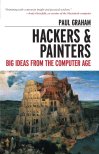
Hackers & Painters

I’ve been searching for a copy of Hackers and Painters for some time now. A free copy, mind you. I kept hoping that some generous soul would eventually upload a bootlegged ebook for me to download on Bittorrent. I feel like Paul Graham would have wanted it that way.

Well, I finally found a copy at the Santa Clara City Library.

One thing I learned is that hacking is more like painting than it is like software development. The programming done in a corporate environment requires an adherence to predefined specs. The programmer is effectively forced to color in a coloring book.

Hacking involves design. The code materializes as a rough sketch. It’s ugly and has not been fully thought out. The hacker gradually fills in contours, then details. He might deviate from the original plans. But he iterates and refines the design until it becomes something beautiful.

A painting is never finished. You just stop working on it.

It is the same with software.

The Importance of Stop-Loss Mechanisms

An excerpt from one guy’s account of what it was like to work at Lehman Brothers:

“Would you rather have someone shit on your face, but then be able to spend the day however you please, or would you rather go to work today?” Eventually the answer for all of us was unequivocally, “Shit on the face.” So something I know now: When you’d rather have someone shit on your face than go to work, it’s probably time to leave.

When starting a job or relationship or anything that requires an investment of time, it’s always good to have a stop-loss mechanism in place. Some sort of metric to indicate when to get out. Although, things would really have to be abysmal before I might be willing to get shat on. I imagine that most people would choose to set their stop-loss threshold a bit lower. Maybe these guys were German, I don’t know.

My Time at Lehman –nickchirls

Why You Have No Passion

“If you really want to fly, just harness your power to your passion. Honor your calling. Everybody has one.” –Oprah Winfrey

Shut up Oprah, no they don’t. Everybody gets it already. We’ve all had the “follow your dreams” mantra drilled into our heads by various inspirational figures for the past couple decades. Nobody ever says “Life is short, and you owe it to yourself to spend the majority of it giving yourself wholly and completely to something you absolutely hate.”

Franz Josef Glacier

Two years ago, I was hiking up Franz Josef Glacier in New Zealand when I was stricken with a bout of food poisoning. I had consumed some bad fish and chips the previous night or something. My first hint was a sudden tightening sensation in my lower abdomen. A squeeze and some pressure. I took a few deep breaths, and it subsided.

Several minutes later, it came back. This time it was a sharp twisting, like someone was trying to wring out my large intestine like a wet washcloth. My face turned white and I broke out in a cold sweat.

I recalled what our tour guide had said to us in the morning. Please be sure to use the bathrooms before the hike. Anything left on the glacier will be frozen there forever.

Can’t…desecrate…pristine…glacier. I rested my palms on my knees with bated breath. The twisting relaxed, and I could continue.

Of course, it was only a matter of minutes before it returned with a vengeance. An invisible hand drove a seppuku blade deep into my gut, turning it in like a corkscrew and bringing me to my knees. We had 2 hours left on the hike, and for the first time in my life, I prayed.

That’s what it feels like to have a passion. Nobody needs to be told to follow it. Working full time on anything other than that passion is like trying to hold in an explosive hot dump. Pursuing a passion is an act of relief, not work.

Problem is, most people don’t think they have a passion. How can you recognize passion if you’ve never felt agony?

Passion does not spring forth from an immaculate conception. It requires a life of exploration and misery and setbacks until you have something to express. That takes work. So get out there and gorge yourself.

The Next Golden State

20110528_ldp002

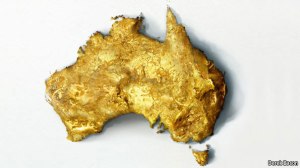
Two years ago, the Economist featured a cover story touting Australia as The Next Golden State. Perfect weather, beautiful beaches, and prolific government investments in higher education in hopes of building a technology hotbed to rival the one in the original Golden State.

Things were looking great. The commodities supercycle was going to drive economic growth FOREVER. Lucrative mining jobs brought an influx of immigrants – today, over a quarter of the population were born abroad.

Wages increased. Well, some did. Those employed in mining could earn salaries of over $200k with little training or education. For those outside the mining sector, wages were shit. People flocked to mining-related jobs.

The rapid population growth led to a housing shortage. Australia’s major cities did not have the infrastructure to support such quick expansion. By 2011, the rate of homelessness increased to 1 in 200, more than double the rate in the US. Many of the homeless were employed full time.

Good thing they were saving money by forgoing rent. The massive immigration fueled high income elasticity. The cost of living exploded. Sydney is now the third-most expensive city in the world.

Between 2009 and 2011, the Aussie dollar appreciated 43% against the USD. Tourism suffered. Manufacturers couldn’t find markets for their exports. Plants shut down, and their employees moved to support the mining industry. It was a classic case of Dutch disease.

Australia GDP contributions

Now the commodities boom is over. The mining industry will shrink, and unemployment will rise. The country will need to rebuild its non-mining sectors. The AUD will fall, whether by tracking gold prices or through RBA monetary policies.

Dreams of building a Silicon Valley down under may be dashed. Much of the research funding provided to academic institutions came from the mining industry, whether directly or indirectly through tax revenue.

Australia may not become the next Golden State, but at least it can finally go back to being a cheap holiday destination for the rest of us.

Australia Gold Coast