Life is like photography. We develop from the negatives.
The source of this quote is unknown. I’ll attribute it to a Kodachrome ad. Seems plausible. In a few years, people will say, “What the heck is a negative? And who the hell is Kodak?”
Sometimes, things are confusing and frustrating and I don’t know what to do. Then I remember that, in the grand scheme of things, I have it pretty damn good. And I’m grateful for all the people who have come through my life to make it this way. Even the a-holes who knocked me down, spit me out, and left me curled up and crying until my nose bled. I’m grateful for you bastards.
I ordered a potted orchid from ProFlowers for my mother on Mother’s Day. Nothing says “I am a good daughter” like a generic, commercially-delivered gift.
The potted orchid died after about a week. My mother called me to complain.
“Plants have a very short life cycle,” I explained. “They just don’t live very long. They’re kind of like my pet goldfish.”
My mother didn’t really like my answer, but she let it go. A few weeks later, she called me again.
“I called the flower store and they sent me a new orchid to replace the dead one,” she said. “The boy who answered their customer service number was very nice. He has a Master’s degree in Economics from UC San Diego.”
“That’s great news,” I said. “Why would the customer service guy tell you about his degree from UCSD?”
“He asked for my email address. I don’t have one, so I gave him your brother’s email address. [Ed. Note: My brother goes to UCSD.] Then he told me he went to UC San Diego too.”
“Well, that is very nice. Happy Mother’s Day.” I moved to hang up the phone.
“Hey…” she said.
I waited.
“Why is a nice boy who graduated with a degree in Economics from UC San Diego working at the call center for a flower store?”
This might have been the toughest question a student ever asked me.
“Because I just spent the last 30 minutes talking about it and it’s going to be on the final exam.”
The truth was, I had no idea. I hadn’t drawn a Bode plot since I took analog circuits as an undergrad. Not a single one of those students will ever have to draw a freaking Bode plot unless they decide to pursue a career as an analog circuit designer, in which case I would advise them to begin filling out their Centrelink* applications right now. And I would like to think that even Australian semiconductor companies have access to the luxury of computer systems these days.
I received similar questions during my brief tenure as a university lecturer:
“Why do I need to learn to code in assembly?” Because you might go work for one of the 3 companies left on the planet who require that. “Why do I need to learn the Fermi-Dirac distribution?” Because you might hate your parents and decide to become a physicist. “Why do we need to learn binary arithmetic?” Because your calculator might break. Oh, and we’re going to build a microcontroller later in the term.
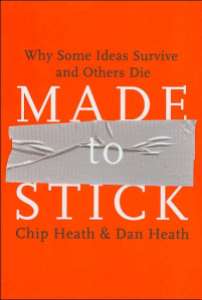
Here’s an excerpt from Chip and Dan Heath’s Made to Stick (highly recommended). This was a much better response from a high school math teacher whose students always asked, “When are we ever going to need this?”
Now I say, “Never. You will never use this.”
I then go on to remind them that people don’t lift weights so that they will be prepared should, one day, [someone] knock them over on the street and lay a barbell across their chests. You lift weights so that you can knock over a defensive lineman, or carry your groceries or lift your grandchildren without being sore the next day. You do math exercises so that you can improve your ability to think logically, so that you can be a better lawyer, doctor, architect, prison warden or parent.
MATH IS MENTAL WEIGHT TRAINING. It is a means to an end (for most people), not an end in itself.
So, kids, you really need to draw Bode plots to foster the self-loathing that will plague you for the rest of your careers as an engineer, so that you can become a more pliable employee, spouse, parent, or doormat.
*Centrelink is the Australian equivalent of welfare checks.
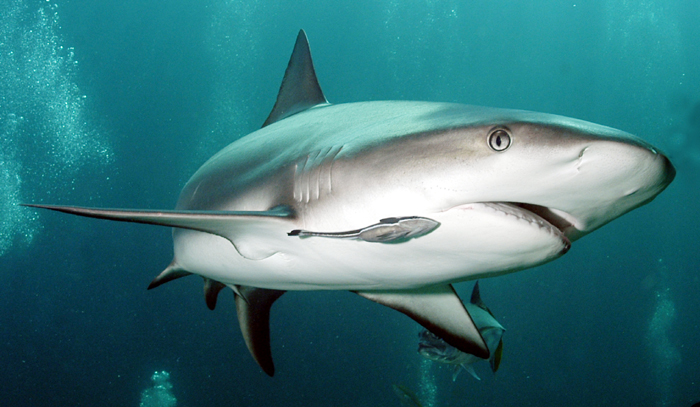
A remora is a cool little fish. It is frequently found attached to larger animals, like sharks. The remora feeds by eating parasites and droppings off the shark’s skin. In return for the cleaning service, the shark provides some protection for the remora because, hey, it’s a friggin’ shark.
This is called a symbiotic relationship. When each individual does what is best for the other creature, she is also doing what is best for herself.
Some relationships are about sacrifice. Those aren’t symbiotic. If one creature gains at the expense of the other, then that is a parasitic relationship. If the remora were to start feeding on the shark’s flesh, the shark probably wouldn’t want to hang out with her anymore.
But wait, said the shark. Last week, my remora got really sick. I had to take time off from doing shark stuff to take her to the hospital. Wasn’t that a sacrifice?
Well, Shark, how did you feel about saving the remora’s life and being a good sharkfriend? Did it negatively impact how you view your life?
No, said Shark. I was proud of myself for being a supportive sharkfriend.
Sharks have no use for artwork.
Wait a minute, said the remora. I spend 40 hours a week rimming Shark’s anus. I hate this job. I want to be an artist, and I’m only stuck to this shark because I need the food. This does not feel very symbiotic.
It’s not. It’s a messed up codependency. You should find some other animal who will feed you in exchange for your art. Or maybe create artwork on your own, and trade it with other remoras for food. If you hate what you are doing, then you are probably doing a crappy job anyway. Let Shark go so she can find another remora to take your place.
Apple has long been a driving force (or just a leading indicator) of global design trends.
In the 80s, it was all about technicolor and gay rights. Since the advent of Web 2.0, it has been about rounded corners and drop shadows and shiny glossy lens flares.
Based on iOS 7 previews, the next big thing will be rainbow gradient geometric shapes. Like Flatland* on an acid trip.
Maybe it’s time for a new Apple logo. Here, I’ll do it for you Jony.
*I never liked Flatland. In a truly 2-dimensional world, the shapes should have been invisible to each other.