The Asshole Correlation

south park wow

I decided I’m gonna become a badass hacker. I’ll grow into a shiftless blob and drink lots of Red Bull. And I’ll sit at my computer til the wee hours of the night, only getting up to pop another Hot Pocket in the microwave. Maybe I’ll hang out on EFnet. I don’t really want to spend a lot of time coding, cuz that’s hard, but I think I can make up for it by being extra amorphous. That’s what hackers are like, right?

Similarly, aspiring managers should follow the models of highly successful CEOs: Steve Jobs, Travis Kalanick, early Bill Gates, and Ev Williams were all relentlessly greedy assholes. The more ruthless the founder, the more successful the company. Clearly.

Travis Kalanick

Walter Isaacson’s Steve Jobs biography did the world a disservice by bringing to light all the actions Jobs took on his rise to success. Jobs withheld stock options from early team members, threw tantrums, fired employees without warning, all while building the most valuable company in the world.

With a publicized exemplar of such a successful asshole, raging egotists in management positions saw ringing endorsement for behavior they might otherwise suppress.

We don’t often cite the counterpoints: Tony Hsieh, Larry Page, and Elon Musk are genuinely nice people who built just as successful companies. But it’s more fun to talk about the assholes.

In the end, all these people built bajillion-dollar companies not because they were or were not assholes, but because they created value.

[Steve Jobs] succeeded because he was Steve Jobs. He had an uncanny sixth sense about what consumers wanted, an unmatched ability to adapt existing technology and turn it into something new, and a commitment to quality that turned ordinary Apple customers into fans for life. Being an asshole was part of the Steve package, but it wasn’t essential to his success. But that’s not a message most of the assholes in the corner offices want to hear. [1]

The problem with being an asshole is that you end up losing your allies. Jobs was fired 9 years into Apple, at the age of 30, because people finally got tired of his crap. But way back in the early days, Jobs famously screwed his cofounder Wozniak by lying about the payouts they received from Atari so that he could keep the money for himself.

wozniak-and-jobs

It took Woz a decade to find out. Had he learned sooner, he might have decided against teaming up with such a turd. Then no one would have built the Apple I, Jobs would have had nothing to sell, and Apple as we know it would not exist.

Fred Wilson writes today that being nice pays dividends in the form of reputation. If people like you, they’ll bring you opportunities [2]. As a startup, when there isn’t a lot of capital, people aren’t just the most valuable asset, they’re the only asset.

Being a greedy asshole may generate quick returns, but it isn’t sustainable. Eventually you run out of allies.

See Also:
1. Be a Jerk: The Worst Business Lesson From the Steve Jobs Biography –the Atlantic
2. Be Nice or Leave –AVC


Steve-Jobs-by-Walter-Isaacson

100 Percent Men

Hey Ladies! Single and looking to up your chances? Consider joining one of these companies where every single employee is male! Of course, that’s only if they hire you. They might be 100 percent men for a reason.

Boombotix. Ratio: 12:0
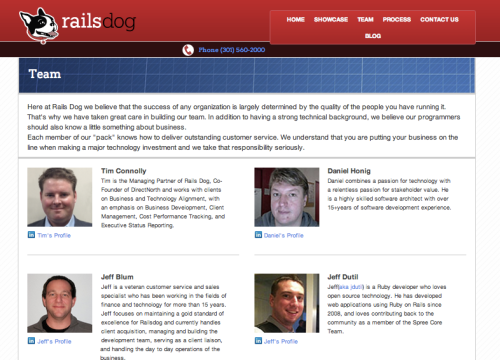
Railsdog. Ratio: 12:0
Big Room Studios. Ratio 14:0
Big Room Studios. Ratio: 14:0
Fireproof Games. Ratio: 16:0
Pivotal Labs. Ratio: 13:0

Need more options? See Also:
Boys Clubs

I Own Vernon Davis

Vernon-Davis-San-Francisco-49ers-Player-Wallpapers

I have no idea who Vernon Davis is. I guess he plays football. The 49ers web page calls him a “tight end” (hehehehhe). Also, I bought him through Fantex.

Back in April, Fantex opened up trading on Vernon Davis securities as the first offering on its new brokerage platform. Fantex paid Davis $4M in exchange for 10% of his earnings for the rest of his life. These were repackaged as shares that investors could trade on Fantex.

Now that I am a shareholder, I get a percentage of Vernon Davis’s earnings both present and post career. Do life insurance payouts count as post-career earnings?

Vernon Davis trading activity since IPO. Average volume: 90. Median volume: 0.
Vernon Davis trading activity since IPO.
Average volume: 90. Median volume: 0.
Unlike a reputable exchange such as NASDAQ, there are no market makers — That is, there are no brokerage firms willing to provide buy/sell quotes and hold assets to increase liquidity.

Because pro athletes tend to be prudent managers of their personal finances and have a track record of being candid about their income, I’m sure we can trust that Vernon Davis and other Fantex offerings will dutifully turn over 10% of their earnings for the rest of their lives.

Celebrity securitization is not a new concept; David Bowie issued “Bowie Bonds” against his future income to promote a new album back in 1997, well after anyone even knew who David Bowie was anymore. The bonds were later downgraded to junk status.

photo-reuters

As with any investment, there is some risk involved, and not just that of high profile athletes having a history of financial problems. The investor also assumes Fantex counterparty risk because the exchange platform is itself a startup (See Also: Mt. Gox).

See Also:
The Implications of Investing in NFL Superstars –SumZero
Fantex.com

The Danger of Irreversible Decisions

A decade ago, the economy was hot and Gold was a hedge against inflation. Gold prices went up. Then the economy tanked, and Gold was a safe harbor against collapse. Gold prices went up even more. Then the Fed instated QE123, and Gold prices went up yet again because the government was printing so much money.

Gold: It’s the one-way trade that never fails!

Until it’s not.

au00-pres

As humans, we seek a reality that matches our expectations. We want to be right, we like to feel smart. Changing your mind is one of the most difficult things we do. It is far easier to fool yourself into believing a falsehood than admit a mistake. Start with an answer and then find data to back it up.

That’s why some people exclusively get their information from Fox News, while others read Huffington Post and BuzzFeed. Conservatives who watch The Colbert Report claim that Colbert is serious, and only pretends to be joking, not the other way around.

ColbertPotsylvania

Ask yourself, “What would make me reverse this decision? What facts or situations or new information would make me change my views or close my position or quit my current goal?”

There should be a long list of technical and fundamental answers. Every decision, no matter how compelling the underlying story, should have an exit strategy. This is especially true of choices that involve a huge emotional investment and an unhealthy reliance on narrative.

If there is no conceivable set of circumstances that would get you to cut your losses, you have a huge, devastating flaw in your approach to decision-making.

See Also:
Confirmation Bias

Be Okay with Being Wrong

My graduate advisor at Harvard said that his most successful PhD student was a guy who graduated and became a comedy writer in Hollywood.

What, did you think it was gonna be the kid who graduated and took a $150k salary at Intel for the rest of his life?

From Howard Marks at Oaktree Capital: You can’t take the same actions as everyone else and expect to outperform.

Passive investors, benchmark huggers and herd followers have a high probability of achieving average performance and little risk of falling far short. But in exchange for safety from being much below average, they surrender their chance of being much above average.

In order to be first to the game, you have to do something that no one else wants to do, at least for a while. And there’s probably a pretty good reason why no one else wants to play that game. And there’s a very real risk that no one will ever join the game, and you’ll look like an idiot playing with yourself forever.

It’s even harder for institutional investors, because not only do they have to risk being wrong, they have to risk being wrong with other people’s money.

It’s not easy to say, “Hey sorry, I lost all of your money investing in this company that lets you hail a cab from your phone. I know everyone said it was a low-margin business in a tiny market, but I like to gamble.”

Public figures need to care about their reputation, and rightly so. John Maynard Keynes: Worldly wisdom teaches that it is better for reputation to fail conventionally than to succeed unconventionally.

Anyone without a reputation to uphold is free to shoot for the moon. Or be content with average. We all have different definitions of success.

See Also:
Dare to Be Great II –Howard Marks, Oaktree Capital